Kirkus Review
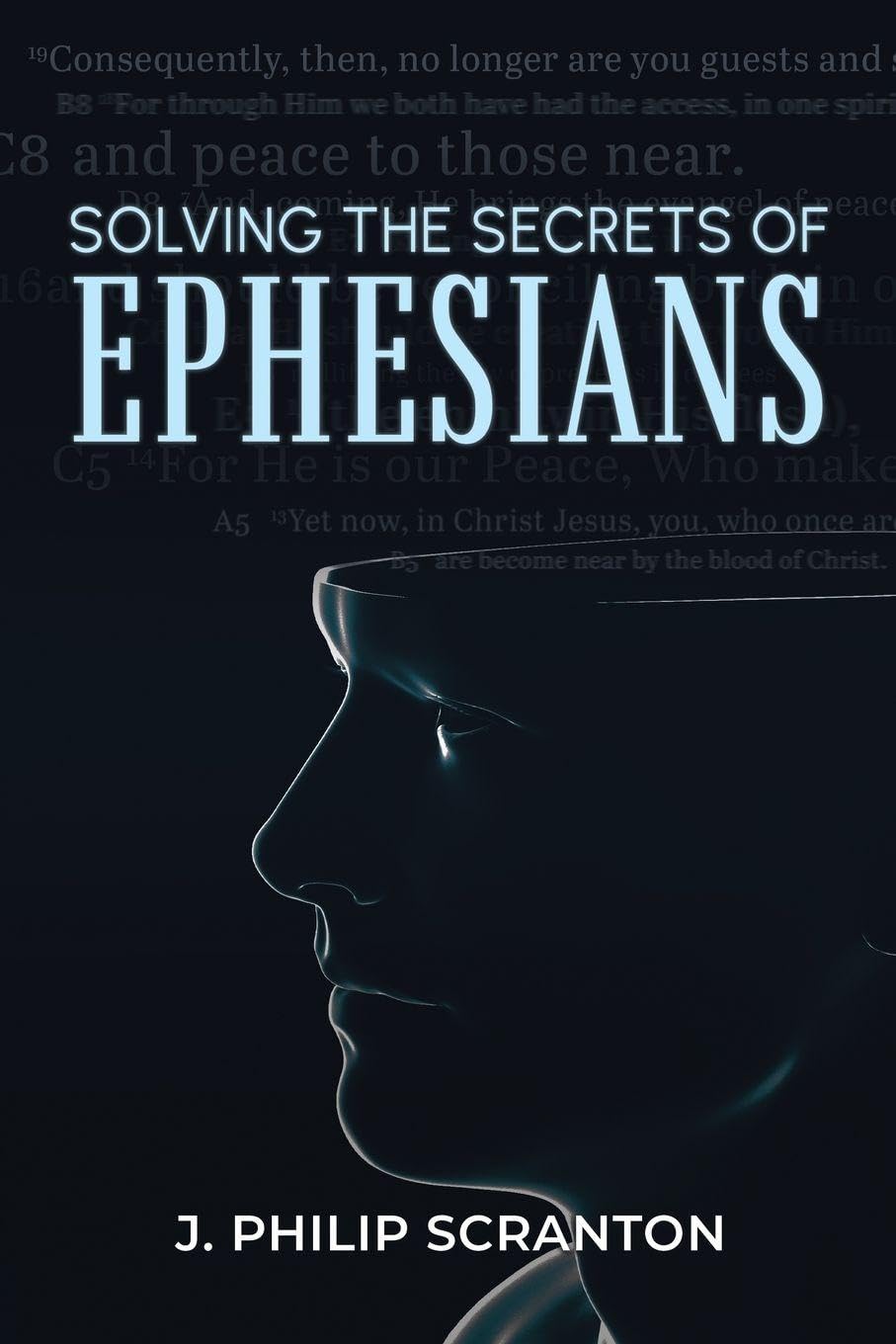
SOLVING THE SECRETS OF EPHESIANS
J. Philip Scranton
Authors' Tranquility Press (140 pp.)
$9.99 paperback
ISBN: 9781968750664 December 4, 2025
BOOK REVIEW
A former pastor reflects on various theological mysteries found in the Book of Ephesians in this Christian commentary.
At first glance, Paul’s epistle to the Ephesians is straightforward in its emphasis on Christian unity and pragmatic advice on how to live a holy life. Yet, as Scranton argues in this book’s introduction, there’s “still much insight to be uncovered” in the Pauline letter. Paying particular attention to the work’s original Greek structure and vocabulary, the author argues that we must look beyond current English translations to truly understand the letter’s nuances. For starters, the standard organization of the letter into chapters, verses, and paragraphs, per Scranton, tends “to hide contextual divisions of the letter” and creates an unnatural division that separates, for instance, the opening prayer of Ephesians from its final chapters. Central to the author’s novel approach to the epistle is his careful attention to Paul’s use of pronouns. “Throughout the first two chapters, Paul is continually volleying back and forth between us (first person plural pronouns) and you (second person plural pronouns),” he observes. This is not mere editorial carelessness, Scranton suggests, but rather a linguistic reiteration of Paul’s focus throughout the letter on unifying Jewish and gentile believers. His use of we, us, and our, per the author, refers to Jewish believers, while you and your refer to gentile believers. Scranton asserts that this strategy creates an ingenious rhetorical distinction between the two groups that will later be powerfully underlined in the letter’s ultimate call for unity. Additional topics include an in-depth analysis of Paul’s conception of “saints” (a word that Scranton believes is incorrectly translated in 2.19) and a contextualization of the biblical book within the Old Testament’s conception of God’s covenant with Israel. Addressing one of Ephesians’ most controversial passages—chapter 5, verse 22, which tells women to “be subject” to their husbands, who are described as “the head of the wife”—Scranton urges readers to place Paul’s statements within his larger analogy of Christ’s relationship to the church.
Though well researched in terms of its detailed exploration of the original text of Ephesians and its connection with other biblical books, this volume evinces relatively minimal engagement with other biblical scholarship. A former pastor with a degree in biblical studies from a Baptist-affiliated Bible college, Scranton takes a distinctly evangelical, Protestant approach to biblical exegesis and interpretation that, for example, excludes Catholic and Orthodox understandings of Paul’s use of the words mystery and saint. By not engaging directly with this rich tradition of Christian scholarship, the author misses a pivotal opportunity to describe how its analysis challenges or affirms two centuries of Christian thought. Despite the text’s emphasis on the complexities of Paul’s literary techniques, Scranton himself writes in an accessible style that eschews jargon for a readable yet nuanced narrative. A thorough study of Ephesians, the work covers the epistle chronologically, verse by verse, and offers readers nearly 50 pages of additional ancillary analysis in its ample appendix material, which includes essays, commentary, and charts covering topics that range from Greek vocabulary used in Ephesians to the New Testament book’s connection to the creation story in Genesis.
An intriguing exploration of Ephesians that neglects to consider other perspectives.
EXCERPTING POLICIES
All reviews acquired through the Kirkus Indie program must be published in their entirety before any portion of the reviews are published (online or in print) for any use.